Key Insights from the 15th China Rare Disease Summit
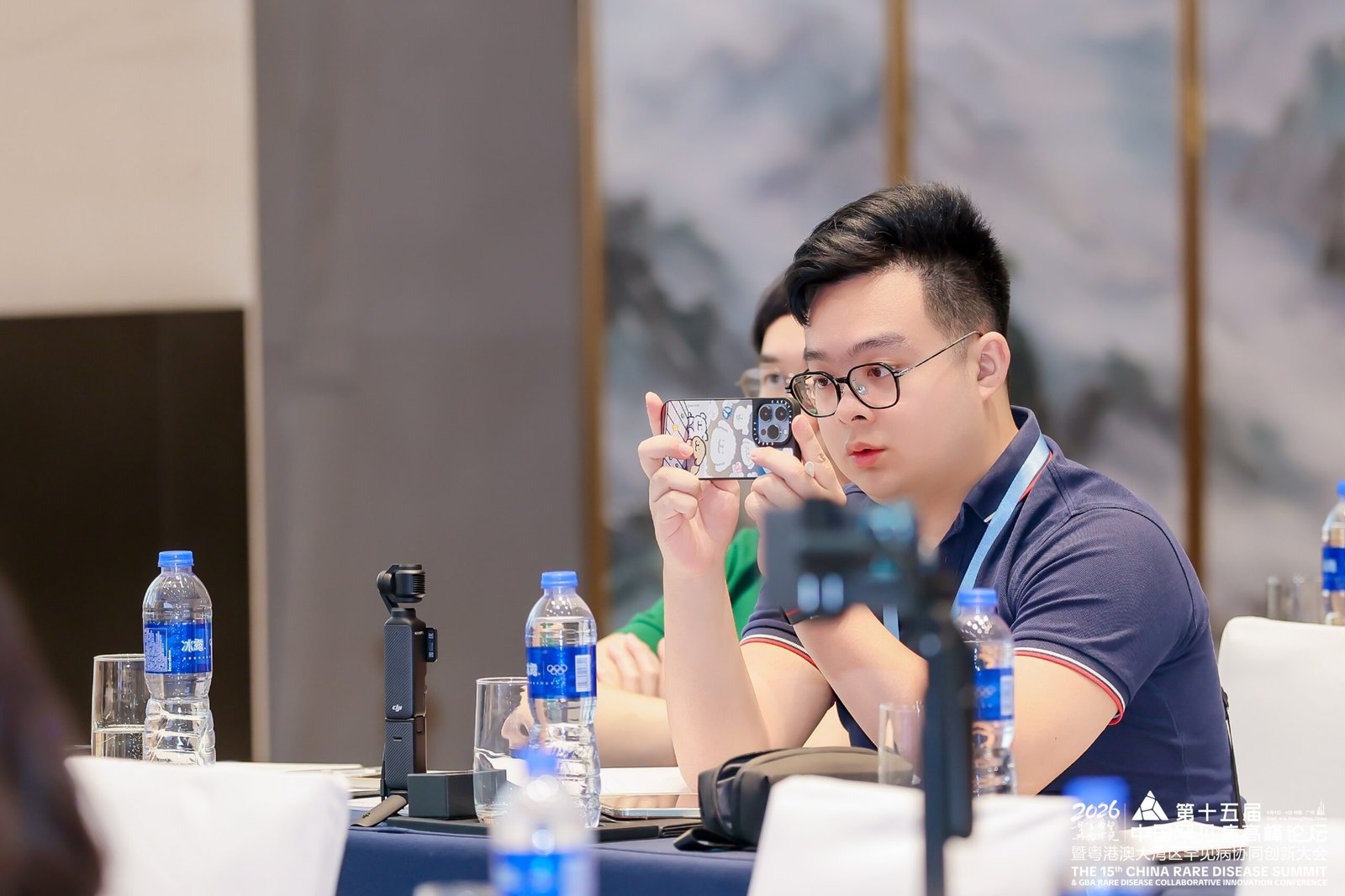
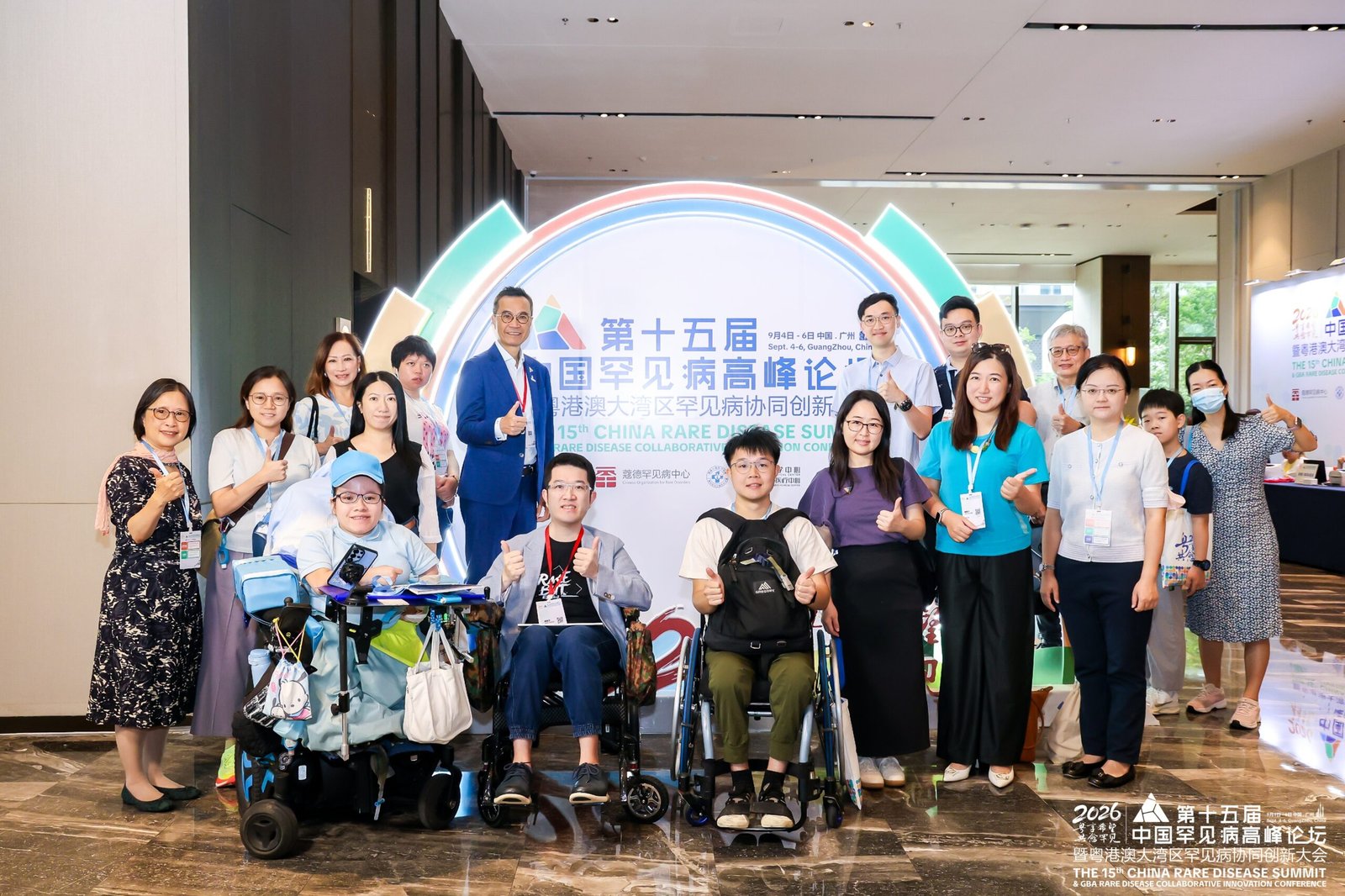
After 3 days of intensive seminars and keynotes at 15th China Rare Disease Summit & GBA Rare Disease Collaborative Innovation Conference in Guangzhou, the summit came to a fruitful close. The summit, organised by Chinese Organiztion for Rare Disorders (CORD), provides the latest advancements happening right now in China, ranging from Gene Therapy for Rare Diseases to Rare Disease Detection Systems and extending to applications of using Hong Kong registered drugs and medical devices in Guandong-Hong Kong-Macao Greater Bay Area (GBA). I am honored to a part of Rare Disease Hong Kong (RDHK) and Hong Kong Wilson’s Disease Association (HKWDA) delegates.
To be frank, I was not too sure what message I will receive from the summit, since it was my first summit attendance to any rare disease summit. As a secretary of HKWDA and a delegate from RDHK, my biggest question is how does all of the insights I have gained can translate to Hong Kong. Luckily, I found a few key insights that are equally applicable in Hong Kong and probably on a global scale.
1. Unity
Chinese rare disease association or communities has grown from 19 in 2011 to over 200 this year, and yet different communities of the same rare disease fight against each other, which ends up in a lose-lose situation. As patient communities, we should be projecting a unifed front, showing unity among us. When we are separate, we are weak, but when we unit we are strong. Instead of malicious competition, we should be putting down spears and strive for win-win situations. Communities have yet to form a formidable power when we are quarreling.
Hence, I believe in the necessity of this summit. It provides the needed platform for diagloue, where all people gathered at one place listening, learning and leveraging synergies. All people who cares about rare diseases, doctors, patients, families, educators, executive members of organisations, pharmaceuticals and scientists, can join hands in making change. Change that can improve the patient’s day to day lives, as well as their diagnosis and treatment journey.
2. Off-label Drug Use
Off-label drug use is an interesting topic as it hits close to home. Currently Hong Kong provides a few drugs for Wilson’s Disease, namely Penicillamine, Trientine and Zinc salts. The former of the two are chelating drugs that binds to excess copper so it can be excreted out the body. However, in some rare cases, both of these chelating agents causes adverse effects on the patients. For those patients, they left with no copper chelating agents for removing copper from their body. Currently, China has another chelating agent for wilson’s disease patients. Problem is, this agent did not approved for treating wilson’s disease.
This year’s summit shared important frameworks on off-label drug use. Guangzhou Women and Children’s Medical Center and the National Children’s Medical Center (NCMC) shared their experiences on off-label drug use. The main guiding principle in off-label drug use is “the higher the tier of off-label drug use, the thinner the evidence, the greater the risk, and the greater potential value – management stategies must escalate accordingly.” We need to first identify how “off-label” when we administer the drug to patients.
Whether the drug is:
Tier 1: Off-Age, within indication. Approved for adult indications, but lacks pediatric regulaotry approval or pediatric use.
Tier 2: Off-Label, Off indication. Unapproved for this condition across all patient populations, but supported by pathophysiological mechanisms and observavtional cohort evidence.
Tier 3: No indication, Mechanism Driven. Completely unaddressed in official drug labeling, but preclinical or mechanistic research indicates plausible clinical benefit.
Later, we need to policy safegaurds to evaluate each off-label drug use. We need to assess the necessity of administering such a drug, where there is no better effective way to treat this condition. We need to ensure that all drug use can be backed by medical evidence. Then we need consent of the patients and their guardians and have a comprehensive drug use management operation procedure in place on-site to in order to meet compliance, ethics ensuring any off-label drug use are on a case by case evaluation.
Off-label drug use is a hot topic especially with the use of artificial intelligence in flagging potential drug candidates that can applied for other indications. However, we should tread with caution with various safeguards, careful monitoring and documentation and hopefully with better data and insights we can determine whether a drug can be fully adapted for this new use case. I hope that one day this agent can be used to treat patients in Hong Kong that are unable to use both Penicillamine and Trientine via careful medical endeavours in off-label drug use.
3. Application of AI technolgy for diagnosis and drug development.
Artificial intelligence of all sorts are “invading” into every aspect in our lifves, while using AI remains a controversial issue in various arenas, using AI in diagnosis and drug development is no doubt a positive contribution to patients.
In order to better answer medical knowledge, we cannot solely rely on Large-Language Models (LLM) themselves. Even though LLMs have been trained on medical knowledge, it does not mean that they have the latest knowledge, applicable to specific or edge cases, nor able to show their step by step differential reasoning. Hence, the need for having an effective knowledge management is crucial. Hybrid knowledge architecture that incoporate vector databases, knowledge graphs, electronic health records, multimodal store and real time search combined with an intelligent source selection mechanism shall improve answer quality and clinical reasoning. AI agents that have access to multi-omics data, radiology imaging, patient symptoms are useful tools in flagging potential rare disease candidates for clinicians. Advancement in AI technologies and applications can enable clinicians to be able to identify rare disease patients in a shorter period of time.
AI technologies also can help with drug development shortening preclinical trials from 3-6 years down to 1 year, accelerating drugs to market timeline. It is expected with AI, there should be more clinical trials being conducted in the next few years. AI also can be used to enhance clinical trial management. Clinical Trial Centers can finetune their LLMs on center specific data, procedures and research, ensuring quality assurance. These LLMs can then be fitted into quality assurance workflows which can based on the current collected data, producing risk point forumulation, site monitoring reports and on-site monitoring and reporting. With AI agents in place, generating data screening scripts and automated risk control reports, clinical trial centers can operate at higher operational efficiency, labor saving, as well as proactive risk based monitoring, reducing human error and maintaining consistency. These ensures clinical trials can be done safely and in a timely manner and reducing variability across different teams.
The summit provided me with new insights and ideas on my journey in rare disease advocacy but also provided me with new perspective on the use of medical AI in diagnosis and drug development. I am optimistic in the outlook of rare disease diagnosis and treatment in Hong Kong, China and the Globe. We can all play a part in uniting together as one voice for awareness, for better policies and better treatments via either evidence-based off-label drug use and accelerating new drug R&D.